Epic Idle Journey: RPG Battle
Freeplay IncRole Playing
4.627.00 Reviews
- Version
- 0.3.7
- Installs
- 10.00K
- Age Rating
- Teen
Screenshots
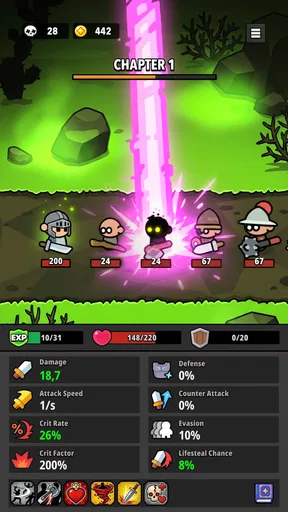
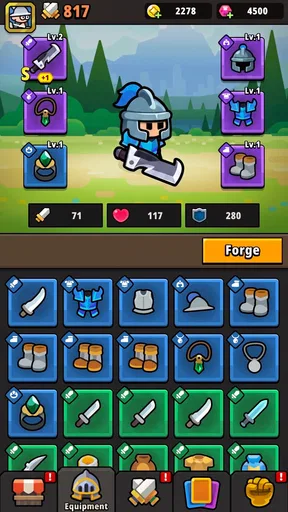
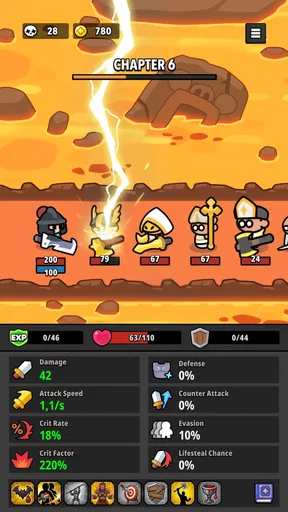
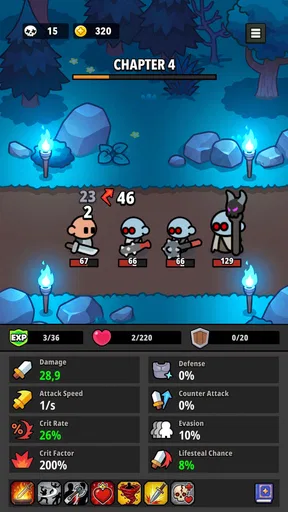
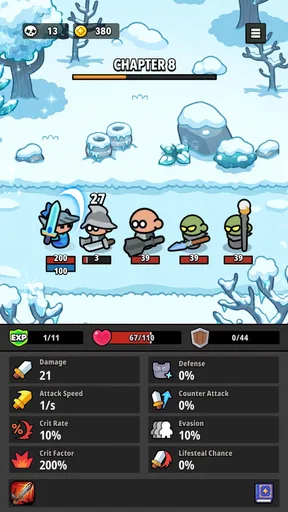
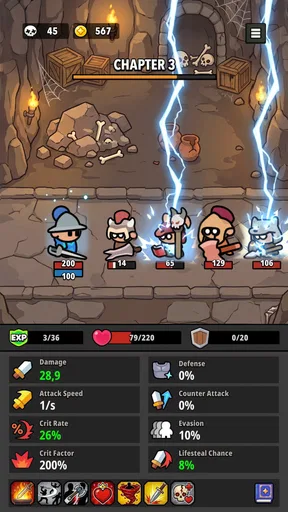
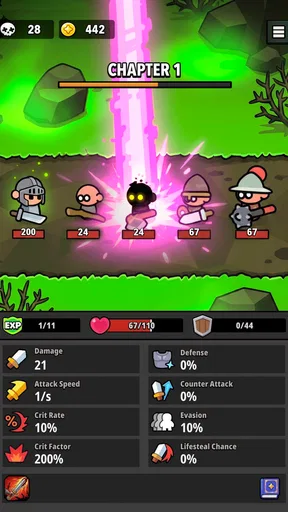
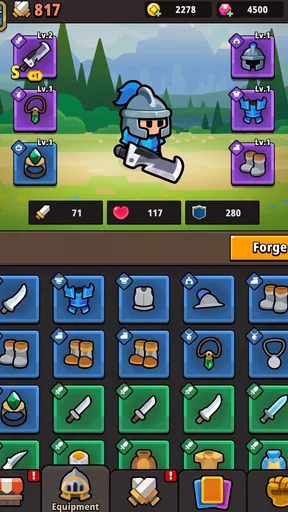
Our Review of Epic Idle Journey: RPG Battle
 Analysis by Appyee
I spent time with Epic Idle Journey: RPG Battle as a light role-playing game for the moments when I want progress without committing to a long session. Its basic appeal is easy to understand: send a hero into monster fights, collect rewards, improve the character, and return later to see how far the journey has moved forward. That makes it a natural fit for short breaks, but it also creates an important question for shared devices: is this a game everyone can dip into, or is it better treated as one person’s ongoing save?
My answer is that it works best as a personal idle RPG, even when it is installed on a household tablet or phone. The game is free to start, belongs to the role-playing category, and comes from Freeplay Inc. It has a 4.6 average from around 1.7 thousand ratings, which suggests that its straightforward progression is landing well with the players who want this style of game. I found the experience most enjoyable when I accepted that it is about small, repeated decisions rather than constant action.
How the game fits into a shared household
A realistic use case is a family tablet kept in the living room. One person might open the game during breakfast, another might use the device after school, and a parent might check it in the evening. That sounds convenient, but an idle RPG usually revolves around one continuing hero and one collection of upgrades. If different people make decisions in the same game, the result can become confusing quickly.
For that reason, I would not present this as a communal game in the same way as a puzzle title that anyone can play for five minutes. The strongest experience comes from following one build over time. A child may want to spend every reward immediately, while an adult may prefer to hold resources for a more meaningful improvement. Neither approach is automatically wrong, but mixing them can make the character feel unfocused.
The game is much easier to share when the household agrees on a simple rule: one person owns the hero’s decisions, and everyone else can watch or take a turn only with permission. That small boundary prevents the most common source of frustration. It also keeps the game’s relaxed rhythm intact, because nobody has to repair an upgrade path chosen by somebody else.
I especially liked the possibility of using it as a quick check-in game rather than a full evening activity. A player can look at the current state, collect what has accumulated, improve the hero, and leave. This makes it suitable for a commute break, a waiting room, or the few minutes before bed. It is less suitable for a group gathered around one screen looking for shared excitement, since the central pleasure is personal progression rather than coordinated multiplayer play.
Why one continuing save matters
The most useful way to think about the game is as a small routine. I would open it, inspect what the hero had earned, identify the weakest part of the current setup, and then decide whether to improve immediately or continue toward a larger reward. That sequence gives the game more depth than simply tapping through battles, because the interesting choice is often what not to spend.
On a shared device, that decision-making layer needs an agreed owner. If two people are using the same profile, they should at least say what they changed before handing the device over. This is not a formal feature of the game; it is a practical household habit. Without it, a player can return to find the hero stronger in one area but unexpectedly short of the resources they were saving.
There is also a social advantage to keeping the game personal. A younger player can ask an older sibling or parent why a particular improvement was chosen, turning a routine upgrade into a small planning exercise. The adult should explain the trade-off instead of simply taking over. That keeps the game approachable while avoiding the disappointment of a child discovering that their progress has been redirected.
Setting boundaries before anyone starts playing
Because the game is free to download and play, it is easy to install casually. The important household conversation is not about the initial cost but about the optional purchases attached to the experience. Individual in-app items range from $0.99 to $99.99, so I would not leave spending decisions vague on a shared phone or tablet.
My practical recommendation is to decide in advance whether purchases are allowed at all. If they are not, everyone using the device should know that rewards and upgrades must come from normal play. If a household does permit spending, the person responsible for the account should approve each purchase rather than allowing a child to make an impulse decision while chasing a stronger hero.
This matters more in an idle RPG than it might seem. The loop is designed around wanting the next improvement, the next reward, or a faster route through a difficult stretch. That motivation is part of the fun, but it can also make a purchase feel like a shortcut at exactly the moment patience is required. I found the experience more satisfying when I treated spending as optional rather than necessary for enjoying the basic loop.
I would also establish a clear handover routine for a shared device. The current player should finish whatever decision they are making, leave the hero in a stable state, and tell the next person whether rewards have already been collected. This avoids accidental double-checking, rushed choices, or arguments about who changed the character. It sounds minor, but idle games are built around returning to a continuing state, so orderly handoffs are genuinely useful.
Coordinating upgrades without taking over
The best coordination method I found was to give each session a single purpose. One visit might focus on checking the hero’s current strength, another on deciding how to use accumulated rewards, and another simply on seeing whether the character can move through the next set of monster encounters. This prevents a shared player from making several unrelated changes just because the buttons are available.
For a child and parent sharing the game, I would use questions instead of instructions: “What are you trying to improve?” or “Do you want a quick benefit now or are you saving?” That keeps the decision in the player’s hands while encouraging them to notice the relationship between battles, rewards, and upgrades. The game is simple enough for this kind of conversation, but it still offers room for basic resource judgment.
A useful tip is to pause before spending a reward when the hero has just reached a new stage of progress. Immediate upgrades can feel rewarding, yet waiting briefly lets the player see whether the next obstacle actually exposes a weakness. This is one of the more valuable habits for avoiding waste. It also makes the game less about pressing every highlighted option and more about responding to what the hero is struggling with.
Another practical habit is to keep a verbal record of the last meaningful change. “I improved the hero’s attack” or “I used the reward on the current upgrade” is enough. On a personal device, the player naturally remembers their own plan. On a household device, that memory needs a little help. The point is not to turn a casual game into paperwork; it is to protect the continuity that makes idle progression appealing.
Age, trust, and the Teen rating
The game carries a Teen content rating, so I would not treat it as an automatic choice for very young children. The rating is a useful reminder that parents should make their own judgment about whether the monster-fighting theme and progression loop fit the child using the device. I would be comfortable introducing it to an older child or teenager with a conversation about spending and shared saves, but I would not hand it to a young child without checking the experience first.
Trust matters because the game combines a continuing character with optional purchases. A trustworthy player will ask before spending, avoid changing somebody else’s plan, and accept that not every reward needs to be claimed immediately. Those are simple expectations, but they are more important here than complicated household rules.
I also think the game suits teenagers and adults who enjoy low-pressure progression better than players looking for a dramatic story or demanding combat system. The appeal is in returning to a developing hero and making the next sensible improvement. Someone who wants direct control, fast reactions, or a large narrative world may find the idle format too passive.
On the other hand, the Teen rating does not prevent the game from being a comfortable shared topic. A parent can ask what the hero is working toward, a sibling can compare upgrade choices, and a child can explain why a particular reward mattered. The important distinction is that discussion and supervision are helpful, while pretending the game is designed as a family account experience would create the wrong expectations.
What makes the idle format enjoyable
The main strength is convenience. I do not need to prepare for a long session to feel that I have done something useful. A short visit can still produce a reward, an upgrade, or a clearer idea of what the hero needs next. That makes the game a good companion for people who like role-playing progression but rarely have an uninterrupted hour.
The monster battles provide a clear reason to improve the hero, while legendary rewards give the journey a sense of anticipation. I would describe the loop as more about momentum than surprise. The satisfaction comes from seeing a previously difficult point become manageable after a few sensible improvements.
That same structure creates the game’s biggest limitation. Once the novelty of the progression loop settles, players who need constant variety may feel that they are repeating the same basic pattern. I did not see it as a replacement for a deeper, actively controlled role-playing game. It is closer to a background adventure that rewards regular attention without demanding it every minute.
The current release is version 0.3.7, which also places the experience in an early stage of its development. I would approach it as a game that may still be finding its long-term shape rather than as a fully mature role-playing platform. That is not automatically negative: a lighter structure can be easier to understand, and early players may enjoy watching the journey develop. Still, anyone expecting a huge amount of content from the first session should keep expectations measured.
Where it beats ordinary alternatives, and where it does not
Compared with a traditional action RPG, this game asks much less from the player’s hands. There is no need to steer every encounter or memorize a complex control scheme. That makes it better for short breaks and shared attention, especially when someone is also commuting, waiting, or taking care of household tasks.
Compared with a standard clicker, it has a stronger role-playing identity because the hero, monster fights, and rewards give the repeated actions a clearer adventure frame. I found that difference useful: the game feels less like watching a number rise and more like checking in on a character’s journey.
However, an action RPG is the better choice when I want skill-based challenge, while a story-heavy role-playing game is better when I want memorable characters and plot decisions. A competitive game is also a better fit for friends who want everyone making meaningful moves at the same time. This title is specifically for the middle ground: progression with minimal pressure and a reason to return.
There is a trade-off with household use as well. A shared action game can be passed around because each round stands alone. Here, the continuing hero makes sharing more delicate. If the device belongs to several people but each person wants an independent adventure, separate profiles or separate devices would be preferable where available. I would not assume that one in-game journey can cleanly represent several players’ different plans.
Who should try it and who should skip it
I would recommend it to someone who enjoys improving a character in small steps, likes collecting rewards, and wants a game that fits around an ordinary day. It is particularly well suited to players who enjoy checking progress in the morning, making one or two decisions during a break, and returning later without feeling punished for leaving.
It is also a reasonable choice for a teenager or adult who wants a low-effort role-playing game on a personal device. The free entry point makes it easy to test the central loop before deciding whether it deserves regular space on the phone. The positive average rating and more than ten thousand installs show that it has already attracted a modest player base, although those figures should not replace personal testing.
I would skip it if my priority were deep manual combat, a substantial story, or a game that works equally well as a group activity. I would also avoid installing it on a shared family device without first agreeing on purchase rules and ownership of the save. The game itself may be simple, but the household friction around one shared hero can be surprisingly real.
Storage and device compatibility are worth checking before installing. The listed minimum operating system is Android 7.1, so it is accessible to many older Android devices, but an older system alone does not guarantee that every device will feel smooth or convenient. I would test it briefly on a shared tablet before making it the household’s default casual game.
My household verdict
After using it, I see Epic Idle Journey: RPG Battle as a focused idle role-playing game rather than a universal family game. Its best qualities are the easy return-and-progress rhythm, the clear hero improvement loop, and the way it turns a few spare minutes into a small sense of achievement. I liked that I could make progress without giving the game my full attention.
For a household, the winning arrangement is simple: one named player controls the hero, spending requires permission, and everyone else treats the save as something to observe rather than freely edit. That setup preserves the game’s relaxed character while avoiding the arguments that shared progression can create.
The free price makes trying it straightforward, but the optional purchase range means adults should set expectations before a child plays. The Teen rating also calls for age-aware judgment rather than assuming that a cartoon-style monster adventure is suitable for every child. With those boundaries in place, it can be a pleasant personal game on a shared device.
My final recommendation is cautious but positive. Choose it if you want an accessible idle RPG built around monsters, upgrades, and rewards, and if you are happy with gradual progress instead of constant action. Choose something else if your household needs separate adventures, direct multiplayer coordination, or a richer story. The right way to enjoy this game is to protect the continuity of one hero while keeping the spending and sharing rules clear.
Verdict
Strengths of Epic Idle Journey: RPG Battle
- Easy-to-learn idle combat suits short play sessions.
- Offline progression lets you earn rewards without constant play.
- Hero upgrades and equipment provide steady long-term goals.
- Auto-battle reduces repetitive grinding and micromanagement.
- Colorful fantasy visuals are appealing on smaller screens.
Limitations of Epic Idle Journey: RPG Battle
- Progress can slow noticeably without frequent upgrades or boosts.
- Random loot may make specific equipment difficult to obtain.
- Multiple currencies can make progression feel confusing at first.
- Competitive features may favor players who spend regularly.
- The idle format offers limited control during individual battles.
Other Releases by Freeplay Inc
View All
Snake Run Race・3D Running Game
Arcade4.7

Fidget Toys Trading・Pop It 3D
Simulation4.7

Count Masters: Stickman Games
Action4.6

Twerk Race 3d — Fun run game!
Arcade4.2
Similar Picks in This Category
View All
Hair Dye
CrazyLabs LTD4.4

Monster High™ Beauty Salon
CrazyLabs LTD4.5

Bus Simulator - Bus Games 3D
Jima Apps4.4

Flight Pilot: 3D Simulator
Wildlife Studios4.1


Super Stylist Fashion Makeover
CrazyLabs LTD4.4
Frequently Asked Questions
What is Epic Idle Journey: RPG Battle?
Epic Idle Journey: RPG Battle is an idle role-playing game focused on collecting heroes, improving their abilities, and progressing through automated battles. Your team continues fighting even when you are not actively playing, allowing you to earn rewards and resources over time. The game combines character upgrades, equipment management, stage progression, and strategic team building in a fantasy adventure setting.
Can I play Epic Idle Journey: RPG Battle without spending money?
Yes, you can download and play Epic Idle Journey: RPG Battle without making an initial purchase. Free players can generally progress by completing stages, claiming idle rewards, participating in events, and using the game’s daily activities. However, optional in-app purchases may provide extra resources, faster upgrades, premium currency, or convenience features, so progression can feel slower if you choose not to spend.
Does Epic Idle Journey: RPG Battle require an internet connection?
An internet connection is usually recommended or required for the main features of Epic Idle Journey: RPG Battle. Online access allows the game to synchronize idle rewards, save progress, deliver events, process account data, and connect to competitive or social features. Some basic gameplay may appear accessible temporarily while offline, but you should not assume that all rewards or progress will be recorded without reconnecting.
What kind of strategy and heroes are available in the game?
Although battles are automated, team composition still plays an important role in Epic Idle Journey: RPG Battle. Players typically need to consider each hero’s role, such as damage dealer, tank, healer, or support, along with attributes, skills, equipment, and upgrade levels. Choosing heroes that work well together can make a significant difference when facing stronger stages, bosses, and special game modes.
Is Epic Idle Journey: RPG Battle suitable for casual players?
The game is well suited to casual players who enjoy gradual progression without needing to remain in combat constantly. Idle rewards let you return later and collect resources, while automated battles reduce the need for intensive controls. Nevertheless, players who want the best results will still need to manage heroes, complete daily tasks, use rewards wisely, and occasionally adjust their team for difficult encounters.
Play our best games!


